
Methane Analyzer: Accurate Gas Detection and Monitoring Solutions
Methane is a colourless, odourless, and highly flammable gas that plays an important role in industries such as natural gas processing, petrochemicals, energy production, environmental monitoring, and industrial safety. Because methane leaks can create safety risks and contribute to greenhouse gas emissions, accurate detection and measurement are essential. A Methane Analyzer provides a reliable way to identify and measure methane concentrations, helping industries maintain safer operations and better process control.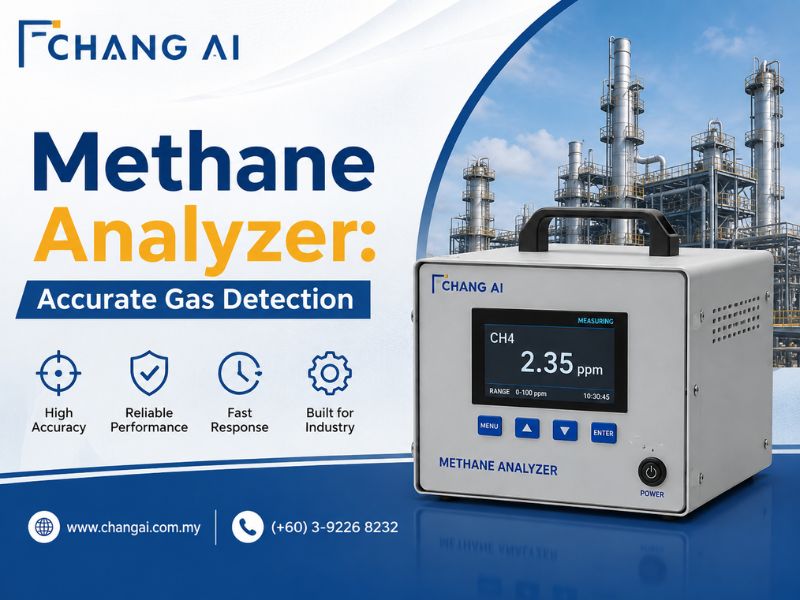
With advances in gas analysis technology, modern methane analysis systems can deliver fast, precise, and repeatable measurements. Chang Ai Technology provides gas analysis solutions designed to support demanding industrial applications where dependable methane measurement is required.
What Is a Methane Analyzer?
A Methane Analyzer is an analytical instrument designed to detect and measure the concentration of methane in a gas sample. Depending on the application, the system may use technologies such as infrared absorption, thermal conductivity, catalytic detection, or other specialised gas measurement methods.
The analyzer receives a gas sample and determines the methane concentration based on the measurement principle used by the instrument. Results can then be displayed or integrated into monitoring and control systems.
Accurate methane analysis is particularly important where even relatively small changes in gas composition can affect safety, production efficiency, or environmental performance.
Why Is Methane Measurement Important?
Methane is widely used as a fuel and is naturally present in natural gas. However, uncontrolled methane releases can create several operational and environmental concerns.
Regular monitoring can help businesses:
Detect methane leaks at an early stage
Improve workplace safety
Monitor gas composition
Support process optimisation
Reduce product losses
Improve environmental monitoring
Maintain consistent industrial operations
Support compliance and reporting requirements
A reliable Methane Analyzer can therefore become an important part of a company's gas monitoring and safety strategy.
How Does a Methane Analyzer Work?
The working principle depends on the type of analyzer. Many industrial systems use a gas sampling system to collect a representative sample before sending it into a measurement chamber.
For example, an infrared-based system measures how methane absorbs specific wavelengths of infrared radiation. The amount of absorbed radiation can be correlated with the methane concentration in the sample.
A typical measurement process involves:
Gas sampling: A sample is collected from the process or monitoring point.
Sample conditioning: The gas may be filtered, dried, or regulated before analysis.
Gas measurement: The analyzer measures methane using its selected detection technology.
Data processing: The instrument processes the measurement signal.
Result display: The methane concentration is displayed or transmitted to another monitoring system.
The correct configuration depends on factors such as gas composition, measurement range, sample conditions, and required accuracy.
Applications of Methane Analysis
Methane measurement is useful across a wide range of industries and applications.
Natural Gas and Energy
Natural gas facilities need reliable monitoring to identify changes in gas composition and detect potential leaks. Methane analysis can support pipeline monitoring, gas processing, storage, and distribution operations.
Oil and Gas
Oil and gas facilities can use gas analysis equipment to monitor methane during production, processing, transportation, and storage. Continuous monitoring can help identify abnormal conditions and support operational safety.
Environmental Monitoring
Methane is an important greenhouse gas, making accurate measurement valuable for environmental studies and emissions monitoring. Industrial sites can use suitable analyzers to monitor methane concentrations around specific processes or facilities.
Industrial Safety
Because methane can form flammable mixtures with air under certain conditions, detecting elevated concentrations is an important safety consideration. Gas monitoring systems can provide operators with information needed to respond to potentially hazardous conditions.
Biogas and Waste Management
Biogas commonly contains methane along with carbon dioxide and other gases. Monitoring methane concentration can help operators understand gas composition and optimise biogas utilisation systems.
Key Features to Consider When Choosing an Analyzer
Selecting the right Methane Analyzer requires consideration of the application's technical requirements rather than simply choosing an instrument based on price.
Measurement Range
The analyzer should provide an appropriate measurement range for the expected methane concentration. Selecting a suitable range can help ensure useful and reliable measurements.
Accuracy and Repeatability
Industrial applications often require consistent results. Accuracy and repeatability should therefore be considered when comparing gas analysis systems.
Response Time
For applications involving leak detection or rapidly changing gas composition, fast response can be particularly valuable.
Sampling Requirements
The sample composition, pressure, temperature, moisture, and contaminants can affect measurement performance. A suitable sampling and conditioning system can help protect the analyzer and improve measurement reliability.
Calibration
Regular calibration helps maintain measurement performance over time. Users should consider the calibration requirements and availability of suitable reference gases before selecting a system.
Benefits of Using a Methane Analyzer
A properly selected Methane Analyzer can provide several practical benefits for industrial users.
Improved safety: Continuous or periodic methane monitoring can help identify potentially hazardous gas concentrations.
Better process control: Methane concentration data can help operators understand and optimise gas-related processes.
Reduced losses: Early identification of leaks can help minimise unnecessary gas loss.
Reliable monitoring: Automated measurements can reduce dependence on manual sampling for applications requiring frequent analysis.
Data-driven decisions: Consistent gas composition data can support maintenance, troubleshooting, and operational decisions.
Chang Ai Technology offers gas analysis solutions designed to meet different industrial measurement requirements. Working with an experienced gas analysis provider can help businesses select a system that matches their application, sampling conditions, and measurement objectives.
Methane Analyzer vs. General Gas Detector
Although both instruments can be used for methane-related monitoring, they are designed for different purposes.
A gas detector is generally focused on identifying whether a gas concentration has reached a particular alarm threshold. A gas analyzer, on the other hand, is typically designed to provide quantitative information about gas composition.
For process monitoring and detailed gas composition analysis, an analyzer may be more suitable. For personal or area safety applications, an appropriate gas detection system may be preferred. In some facilities, both technologies can be used together.
Best Practices for Methane Measurement
To obtain dependable results, businesses should follow good measurement practices. The sampling point should represent the process accurately, and sample lines should be maintained to prevent contamination or leakage.
Regular inspection, calibration, maintenance, and verification are also important. Operators should follow the manufacturer's recommended procedures and ensure that the analyzer is installed in an environment suitable for its specifications.
Chang Ai Technology can help businesses evaluate gas analysis requirements and identify suitable solutions for methane measurement and other industrial gas monitoring applications.
Frequently Asked Questions
1. What is a Methane Analyzer used for?
A Methane Analyzer is used to measure methane concentration in a gas sample. It can support industrial process monitoring, gas quality analysis, environmental monitoring, leak investigation, and safety-related applications.
2. How accurate is methane measurement?
Accuracy depends on the analyzer technology, measurement range, calibration, sample conditions, and installation. For reliable results, users should select an instrument designed for their specific application and maintain it according to recommended procedures.
3. Where are methane analyzers commonly used?
They are commonly used in natural gas, oil and gas, energy, biogas, waste management, chemical processing, environmental monitoring, and other industrial applications where methane measurement is required.
4. How often should a methane analyzer be calibrated?
Calibration frequency depends on the instrument, application, operating environment, and manufacturer's recommendations. Regular calibration and performance verification can help maintain reliable measurement results.
5. How can I choose the right methane analyzer?
Consider the required measurement range, accuracy, response time, sample conditions, gas composition, installation environment, calibration requirements, and data integration needs. Consulting a gas analysis specialist can help identify an appropriate solution.
Conclusion
Accurate methane measurement is essential for industries that work with natural gas, biogas, hydrocarbons, and other methane-containing gas streams. A suitable Methane Analyzer can support safety, process control, gas quality monitoring, environmental assessment, and operational efficiency.
By selecting the right measurement technology and maintaining the system correctly, businesses can obtain dependable methane concentration data for better decision-making. Chang Ai Technology provides gas analysis solutions for industrial applications, helping organisations address their gas measurement and monitoring requirements with reliable analytical technology.