
Moisture control is essential in many industrial processes where even a small amount of water vapour can affect product quality, equipment performance, and operational safety. A Dewpoint Transmitter provides accurate measurements of moisture levels in gases by detecting the temperature at which water vapour begins to condense. Choosing the right transmitter requires careful consideration of several factors, including measurement range, accuracy, operating conditions, response time, and installation requirements.
For industries that depend on reliable moisture monitoring, selecting a suitable instrument can improve process efficiency and reduce the risk of corrosion, contamination, and unexpected equipment failures. This guide explains the key factors to evaluate before purchasing a dew point measurement solution.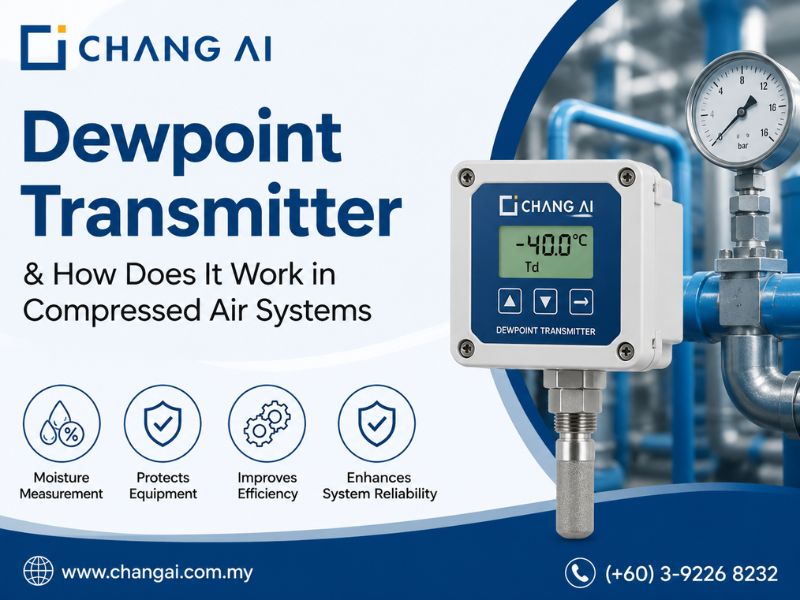
Essential Factors to Consider When Choosing a Dewpoint Transmitter
1. Understand Your Measurement Requirements
The first step in selecting a dew point instrument is understanding your application. Different industries have different moisture monitoring requirements. Applications may include compressed air systems, natural gas processing, industrial drying, pharmaceutical manufacturing, food processing, chemical production, and other gas analysis processes.
Determine the required dew point range and identify whether you need continuous monitoring or periodic measurements. Knowing the expected moisture conditions helps you select an instrument that can provide reliable readings under your specific process conditions.
2. Check the Measurement Range
Measurement range is one of the most important specifications to consider. A transmitter designed for extremely dry gases may not be suitable for applications with relatively high moisture levels.
Before purchasing, identify the minimum and maximum dew point temperatures expected during normal operation. The selected instrument should cover this entire range while maintaining suitable accuracy.
A correctly matched measurement range prevents inaccurate readings and ensures that the instrument continues to perform reliably when process conditions change.
3. Evaluate Accuracy and Stability
Accuracy is critical when moisture measurements are used for process control or quality assurance. Even a small measurement error can result in incorrect decisions, particularly in applications involving very dry gases.
Look for a transmitter with suitable accuracy for your process requirements. Long-term stability is equally important because sensors can experience performance changes over time.
A high-quality instrument should provide consistent measurements while minimizing the need for frequent recalibration. For critical applications, manufacturers should also provide information about calibration procedures and sensor performance.
4. Consider Response Time
Response time determines how quickly the instrument reacts to changes in moisture conditions. This is particularly important in processes where humidity can change rapidly.
A fast-response Dewpoint Transmitter can help operators identify moisture changes quickly and take corrective action before the issue affects production. However, response time can also depend on factors such as sampling system design, gas flow, pressure, tubing, and installation location.
Therefore, evaluate the complete measurement setup rather than looking at sensor response time alone.
5. Check Pressure and Temperature Conditions
Industrial gas systems can operate under high pressure and varying temperatures. The selected transmitter must be suitable for the actual conditions of the application.
Check the manufacturer's specifications for operating pressure and temperature limits. If the instrument is installed in a compressed air or gas pipeline, ensure that the sensor and sampling system can withstand the expected pressure.
Temperature compensation can also be important because changes in temperature can influence moisture measurements. Selecting an instrument designed for your operating environment helps maintain measurement reliability.
6. Look at Sensor Technology
Different dew point instruments use different sensor technologies. Sensor selection can influence accuracy, durability, response time, and maintenance requirements.
When comparing options, consider how the sensor performs in your specific gas environment. Some applications may contain contaminants, oils, chemicals, or other substances that could affect sensor performance.
A suitable sensor should be compatible with the gas being measured and the surrounding process conditions. Reviewing the manufacturer's technical specifications can help determine whether the sensor is appropriate for long-term industrial use.
7. Consider Installation Requirements
Installation can have a significant impact on measurement performance. Even an accurate transmitter can provide unreliable results if it is installed incorrectly.
Consider whether the instrument will be installed directly in a process line or connected through a sampling system. Sampling tubing should be suitable for moisture measurement because certain materials can absorb or release water vapour and influence readings.
The installation location should also represent the actual process conditions. Avoid locations where condensation, excessive heat, vibration, or contamination could negatively affect the sensor.
8. Review Output and Connectivity Options
Modern industrial monitoring systems often require instruments that can communicate with control systems, data loggers, or monitoring software.
When selecting a transmitter, review available output options and communication interfaces. Depending on the application, users may require analogue outputs, digital communication, alarms, or integration with existing process control systems.
Choosing a device with suitable connectivity makes it easier to monitor moisture levels and respond quickly when measurements move outside acceptable limits.
9. Assess Maintenance and Calibration
Regular calibration and maintenance help maintain measurement accuracy over time. Before purchasing, find out how frequently calibration is recommended and how easily the sensor can be checked or replaced.
A transmitter that is simple to maintain can reduce downtime and lower the overall cost of ownership. Also consider the availability of replacement sensors, technical support, calibration services, and documentation.
For industrial applications, reliable after-sales support can be just as important as the initial instrument specifications.
10. Choose a Reliable Supplier
The supplier you choose can have a major impact on the long-term performance of your moisture monitoring system. Look for a company with experience in gas analysis and industrial measurement technologies.
Chang Ai Technology provides gas analysis solutions designed to support industrial monitoring requirements. When evaluating a supplier, consider product quality, technical expertise, application support, documentation, calibration assistance, and after-sales service.
A knowledgeable supplier can help you identify the appropriate measurement range, sensor technology, installation method, and configuration for your application.
Why Proper Dew Point Measurement Matters
Excessive moisture can cause corrosion in pipelines and equipment, reduce the performance of compressed air systems, affect manufacturing processes, and compromise product quality. Continuous monitoring allows operators to identify changes before they become serious operational problems.
A properly selected Dewpoint Transmitter provides valuable information about moisture conditions and can support preventive maintenance and process optimization. It can also help organizations maintain consistent operating conditions and meet specific production requirements.
Final Thoughts
Choosing the right moisture measurement instrument requires more than simply comparing prices. Measurement range, accuracy, response time, pressure and temperature compatibility, sensor technology, installation requirements, connectivity, and maintenance should all be considered before making a decision.
The ideal Dewpoint Transmitter should match the specific requirements of your application while providing stable and reliable measurements. Working with an experienced supplier such as Chang Ai Technology can make the selection process easier and help ensure that your moisture monitoring system delivers dependable performance over the long term.